Photos courtesy of Greg Carney
Garland County residents might have thought they were seeing things recently when the star-studded cast of Turnbuckle were in Arkansas, filming the movie and taking in the city’s sights and flavors, but if the producers of the new film, slated to be released this fall, are correct in their assessment of the Natural State, Arkansans should get comfortable rubbing elbows with movie stars.
Turnbuckle, which took nearly four years to complete and $9 million to make, is described as a darkly comic Southern story about redemption, survival and small-town chaos. Co-produced by Greg Carney (Material Girls) and Evan Ross (The Hunger Games) via Film Mafia Entertainment, a newly formed production house the two founded, the movie was filmed in and around Hot Springs.

Greg Carney
“Filming in Arkansas was a great experience,” Ross said. “The locations gave the film a look and feel that would have been hard to recreate anywhere else, but what really stood out to me was the people. Everyone from the local communities and crew members to the businesses and state film representatives were supportive and invested in helping us make the best film possible. I also loved going out on Lake Ouachita and Lake Hamilton.”

Evan Ross
“As an independent production company trying to compete with the major studios, we don’t have the resources that they have, and we don’t spend money like they do,” said Carney, who spent a portion of his growing up in Hot Springs and still resides in Arkansas. “Yet for some reason, once everybody started to understand they were part of an independent production, we started to get a lot of hands-on help to finish this thing.
“We ended up shooting a really good movie that, I believe, just from the conversations that I’m having, is probably the most prominent independent film currently available for major distributors and streamers.”

Turnbuckle’s all-star cast and compelling storyline, set against a lush Arkansas backdrop, has Tinseltown buzzing
The dramedy stars Emile Hirsch (Into the Wild) as the title character, Trouble Turnbuckle, alongside Kate Beckinsale (Underworld) as Merle, Terrence Howard (Hustle & Flow) as Sheriff Grange and James Franco (Pineapple Express) as Meat Daddy.
Other well-known talent includes Cara Delevingne (Suicide Squad), Macy Gray (Training Day), Sam Strike (Nightflyers), Lily Mo Sheen (The Unbearable Weight of Massive Talent), Randall J. Bacon (Hunting Season) and Tammin Sursok (Pretty Little Liars).

Ross and Carney with cast member Lily Mo Sheen
“At its heart, Turnbuckle is a story about people dealing with pressure, difficult choices and the consequences that come with them,” said Ross, who also stars in the film. “It’s character driven, emotional and engaging, but it also has crazy momentum that keeps the story moving. My hope is that audiences connect with the characters and stay invested from beginning to end.
“This is one of those rare films that feels both dangerous and elevated. The cast is electric, the tone is fresh, and we believe Turnbuckle will stand out as a prestige film with real cultural impact.”
Daemon Hillin (Into the Deep) of Hillin Entertainment and Mia Chang (Ick) of Tunnel Post, who collaborated on producing duties, praised Ross and Carney for the film, saying the decision to shoot in the Natural State gave Turnbuckle a backdrop of raw authenticity.
“Turnbuckle was built by artists and crew who led with heart, grit and vision,” Chang said. “Balancing different voices, cultural perspectives and execution made the process not only meaningful but personal. I’m deeply proud of what we accomplished together.”

“Greg Carney and Evan Ross are building Film Mafia Entertainment into the next great player in this business,” Hillin said. “They bring a fearless creative vision and the kind of cultural edge that makes every distributor lean forward. Film Mafia is absolutely the company to watch.”
If the movie lives up to its current buzz, it will be one of the most notable and commercially accessible films to be shot in Arkansas since 2012’s Mud and 1996’s Sling Blade. As Carney noted, however, getting it shot in the Natural State faced long odds and required more than a little bit of luck.
“I wanted to shoot it in Arkansas,” said Carney, “We had offers from Oklahoma to Louisiana to Georgia, all these states trying to use their incentives and different strategies to get the project and the production to their state. We came very close to shooting this in Valdosta, Georgia, but then the group there defaulted.
“I was boots on the ground here in Hot Springs because I had been scouting the state for a lot of the studio systems for reality TV because I grew up in that space. We ended up shooting the film here. The locals were great. The community was great.”

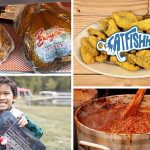
Off-set, cast members experienced Hot Springs landmarks such as local lakes and Deluca’s pizzeria
Carney and Ross are effusive in their praise of state and local officials, starting with the Arkansas Film Commission and trickling down to various local entities.
“None of this would have been possible without the Arkansas Film Commission and [Commissioner] Christopher Crane,” Ross said. “Arkansas, especially Hot Springs National Park, is a little paradise with its lakes, spas, restaurants, casino and the perfect vibe for making a movie.”
“The state was super helpful in working with us on coordinating the project, and the people have been, as well — the venues, the vendors, everybody,” Carney said. “Film and TV are a little bit different than everyday business. Some vendors have to wait a little bit longer to get paid than they’re normally getting paid from somebody who calls them and engages them. It’s just part of the process. There was a lot of understanding with that and a lot of locals working with us so that we could come in and get this done.”
That said, Arkansas remains in a pitched battle with other states for TV and film work that is all too willing to film elsewhere besides the coasts due to cost. Arkansas generally lags rival states such as Georgia and Louisiana in incentive programs, but Carney said there is still a lot to like about what the state offers for filmmakers.
“This is nothing to knock the film commission, but you see a lot of bigger actors going to bigger states,” he said. “If those actors cost $3 million, you can get an incentive for that $3 million. In our state, you only get an incentive up to half a million, so you have to do a lot of workarounds and creative ways to structure a production to get those bigger names into our state.
“It’s difficult to shoot big movies here currently, but we figured out ways to make it happen. We had some big names attached to this, and we packaged it almost like a studio project, even though it was an independent project.”

Ross and Carney also chose Turnbuckle as the vehicle by which to debut a new way of marketing films, a system they believe will set the standard for the way publicity for movies and television is handled going forward. Called a multiformat content ecosystem, the approach leverages a vertically integrated strategy across feature films, vertical series and long-form streaming projects.
“At the core of the strategy is The Journal, an exclusive, behind-the-scenes series filmed over more than three years documenting the full lifecycle of Turnbuckle from development and casting through production and post,” Carney said. “The Journal will highlight the same star-driven production, offering a raw, inside look at the making of the film and its ensemble cast.”
For Turnbuckle, Film Mafia has constructed a three-tier ecosystem: the feature film itself, a long-form “making of” series, and vertical rollout designed to build audience engagement prior to release and sustain retention after distribution.
“The strategy reflects a shift in audience behavior where short-form content drives discovery and long-form storytelling captures deeper engagement,” Ross said. “Film Mafia’s model is designed to meet audiences where they are, then move them up the value chain. We’re building the audience before the release — attention first, then scale.”
Rather than operating as a volume-based production company, Film Mafia is focusing on a curated slate of projects developed and controlled internally, prioritizing cultural relevance, speed and precision execution. With Turnbuckle as its launchpad, the production company is positioning itself at the intersection of film, digital and streaming, building not just projects but scalable content ecosystems designed for long-term value.

The model is being deployed across the company’s slate, including American Junkie, based on the true story of Tom Hansen and his connection to Kurt Cobain, which is being developed with the same integrated framework: feature film, vertical series and long-form companion content designed to build audience before release.
Film Mafia is also advancing a project centered on the life and legacy of former Arkansas Razorbacks basketball coach Nolan Richardson, structured across a scripted series, vertical storytelling and behind-the-scenes documentation within the same ecosystem approach. More projects are also currently in the works.
“The old model was release and hope. This is build, engage and own,” Carney said. “We’re not chasing trends; we’re setting the structure.”
The excitement of the Turnbuckle project filming in his home state represents a full-circle landmark for Carney, whose beginnings were about as far placed from the bright lights of Hollywood as one could get.
“Basically, I grew up a missionary kid in Puerto Rico and the Dominican Republic,” he said. “I was born in Columbus, Ohio, and my parents, who were ministers, went on a mission trip. When they came back, my dad decided that he was going to leave his job as an executive at a trucking company and follow his calling to become a missionary.”
Carney remembers how the stories he was told by his parents about the new adventure assuaged his sadness about leaving the States only to find out their words did not square up to reality very well.
“They were, like, giving us incentives — ‘Hey, this is going to be fun. You guys are going to move. There’s all this cool stuff to do.’ We went to Puerto Rico, and it was completely different than the mission trip that they went on to Guatemala,” he said.
Over 3 1/2 years, the family lived a missionary life. Then Carney’s mother gave his father an ultimatum, and the family came home to America and First Church of the Nazarene on Central Avenue in Hot Springs. Though U.S. born, the time away made for an adjustment for Carney, albeit one he relished.
“I grew up as a minority where we were. I was moving around a lot as a kid, and I’d been to, like, 12 schools in, I don’t know, 13 years,” he said. “I fell in love with Arkansas. I just loved Hot Springs.”
After college, Carney followed two of his siblings to Hollywood. He first made his mark in nightclubs, where he showed a flair for promoting entertainment, drawing crowds and networking as he circulated among people in the business. Among his stack of contacts were then-girlfriend Haylie Duff, actress and sister of star Hilary Duff, and their mother, Susan, a mentor who knew the ropes of the entertainment world.
He served as an executive producer for the Duff sisters’ 2006 film Material Girls, in addition to successfully pitching and selling a reality show concept. Along the way, he also befriended Evan Ross, son of legendary singer Diana Ross, ultimately promoting art shows featuring Evan’s work.
By late 2009, Carney had moved back home to Hot Springs, where he would meet and marry his wife, Sarah, and the couple started a family. He had already formulated plans to leave the entertainment world behind entirely when fate stepped in.
“I was approached by this director and writer friend of mine who basically said they had this movie called Turnbuckle that had a big actor attached,” he said. “The director grew up in Missouri, so he actually frequented Arkansas quite a bit as a kid, like, he would come to Oaklawn. He would come to different spots in Arkansas. He had a heart for Arkansas, and my goal was to bring that project here and produce that within my network.
“I called Evan, and I was like, “There’s this movie, it’s pretty cool, and it’s shot in a Southern state. I want to shoot it in Arkansas, but there are these other states bidding to shoot this project. Would you like to hop on with me and produce this?’ He read it and jumped on board, and when he said yes, that opened up a lot of doors to where we could actually package this thing.
“Evan and I packaged this project, like, probably three or four times over four years, and basically, from there, we went through the journey to get it made.”
Ross said as both a producer and an actor, he was immediately struck with Arkansas, saying the state provided a unique backdrop that was key to setting the mood and tone of the movie.

“At the end of the day, every decision comes back to what serves the story,” he said. “We looked at different options, but Arkansas checked a lot of boxes creatively and practically. The variety of locations, the talented crew base and the support for production made it the right fit. It wasn’t just a budget decision; it genuinely helped shape the world of the film.”
One thing both producers mentioned was the impact the location had on the film’s actors. Off set, Carney made sure the cast was exposed to the best Hot Springs had to offer, from lake life to local bars and restaurants. The producers also showed their appreciation to natives in other ways, such as purchasing extraction equipment for the Morning Star Fire Department, which provided emergency services on set. The equipment came into service almost immediately: A few days after presenting the gift, emergency responders extracted a motorist from a car wreck using the gear, saving his life.
“The people were so great the whole time we were here that we wanted to express our appreciation,” Carney said. “That emergency gear will help the department immensely, and we are happy to have provided that to them.”
Film Mafia has already returned to Arkansas and is hard at work on a streaming series, currently in filming. Ross said his first experience with the Natural State was so impactful and positive that he can see Arkansas as a location of choice for the film industry in the future. He said he hopes Turnbuckle and Film Mafia’s other projects help to underscore that fact.
“I was impressed by how much the state has to offer from a production standpoint,” he said. “The locations are incredibly diverse, the crews work hard, and there’s a real commitment to growing the film industry here.
“I think a lot of people would be surprised by the resources available and how welcoming the state is to filmmakers.”
Carney said his motivation when working in his home state now and in the future is to produce work that is not only compelling storytelling but casts Arkansas in a favorable light. In that way, he hopes he and his company are plowing ground for other projects to follow and take root.
“For our state right now, I feel like we’ve kind of hit our bandwidth, so now it’s more about trying to pick the movies and the TV shows that will benefit the state the most,” he said. “It’s like Dawson’s Creek; when they shot that TV show it changed that whole area where they shot for the better. Same thing with the TV series Nashville.

“A lot of times, shows come here and shoot super specific stuff that might not showcase the state and its grandiose beauty, might not show everything that Arkansas is and sometimes even shows Arkansas in a bad light. I feel like our work actually showcases the real Arkansas. We’re very excited about that.”
International distributors are reportedly circling Turnbuckle, and festival programmers are eyeing competition slots for its upcoming unveiling. Early footage has positioned the film as “one of the must-have titles of the next festival and market season.” The producers have turned their attention to the movie’s release, expected sometime this fall, to include premiere screenings that might include Arkansas. Whether that happens or not, Carney is proud of the project both for the film itself and for showcasing the place where it all came together.
“Turnbuckle was never just a movie production; it became a statewide collaboration between filmmakers, local businesses, artists, public servants, restaurant owners, hotel staff, law enforcement officers, property owners, crystal miners, actors, investors and everyday Arkansans who opened their doors to us,” Carney said. “Arkansas didn’t just host the production. Arkansas became part of the film.”
Watch AY Media Group President and Publisher Heather Baker’s Interview with Producer Greg Carney and Writer/Director Sean McEwen below.
SEE THE FEATURE BELOW AND IN OUR JULY 2026 ISSUE OF AY MAGAZINE